


AI-Powered Logistics
(2026-05-09T04:50.557Z)
Perplexity Query
(2026-05-09T04:50
.557Z)
Question:
Write a comprehensive one-page article about "AI-Powered Logistics".
Model: sonar-pro
AI-Powered Logistics
Introduction
AI-powered logistics refers to the integration of artificial intelligence technologies into supply chain operations to automate, optimize, and predict various processes from warehousing to delivery. This innovation is revolutionizing an industry historically plagued by inefficiencies, delays, and high costs, enabling companies to handle complex global networks with unprecedented precision. As e-commerce surges and supply chains face disruptions like weather or strikes, AI's ability to deliver real-time insights and cost savings makes it essential for staying competitive.
Explainer
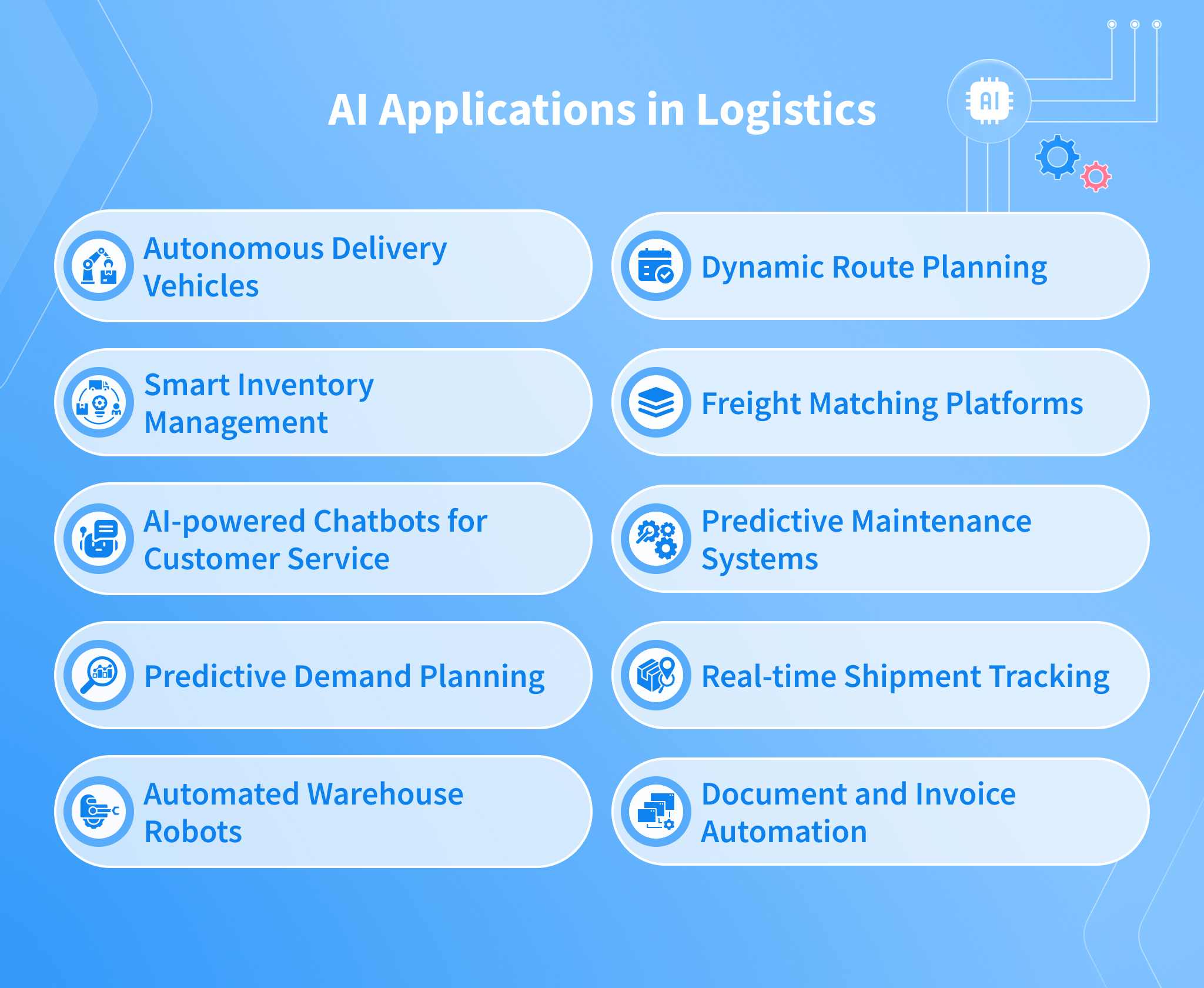
At its core, AI in logistics leverages machine learning, predictive analytics, and automation to analyze vast datasets—including historical sales, traffic patterns, weather, and market trends—to make smarter decisions. For instance, AI algorithms forecast demand by processing seasonality and real-time data, helping firms like DHL avoid stockouts or overstocking, which McKinsey reports can improve inventory levels by 35% for early adopters.
Practical applications abound. In route optimization, AI dynamically adjusts paths for traffic, weather, or road closures, reducing fuel costs by up to 15% and delivery times by 20%, as seen in FedEx's advanced planning systems and Uber Freight's empty-mile reductions. Warehouses benefit from AI-driven robots for picking, packing, and inventory management, while predictive maintenance anticipates equipment failures to minimize downtime. Real-time tracking monitors cargo conditions and ETAs, flagging risks for proactive rerouting.
Benefits include enhanced efficiency, accuracy, and sustainability—optimized routes cut emissions, and chatbots automate customer service. Companies achieve 15% lower logistics costs overall. However, challenges persist: high implementation costs, data privacy concerns, and the need for skilled talent. Integration with legacy systems can be tricky, requiring careful planning to avoid disruptions.

Current State and Trends
AI adoption in logistics is accelerating, with major players like Oracle, DHL, FedEx, and Penske Logistics embedding it into operations for visibility and disruption prediction. Market research from McKinsey highlights early adopters outperforming competitors, while tools from Element Logic and EP Logistics showcase AI in micro-fulfillment centers and road freight. Trends include AI-powered telematics for fleet management and provenance tracking for ethical sourcing, amid a post-pandemic push for resilient chains.

Future Outlook
Looking ahead, AI will evolve with advanced algorithms enabling hyper-personalized logistics, autonomous last-mile delivery via drones and robots, and seamless integration with IoT for end-to-end visibility. Expect deeper predictive capabilities, like anticipating global disruptions from geopolitical events, potentially slashing costs further and boosting sustainability—imagine fleets optimized to near-zero emissions. By 2030, widespread adoption could transform logistics into a fully proactive, AI-orchestrated ecosystem.
Conclusion
AI-powered logistics streamlines demand forecasting, routing, and operations, delivering efficiency gains and real-world wins for giants like DHL and FedEx. As it matures, businesses embracing it will lead a smarter, more sustainable future.
Citations
[1]: 2026, May 06. AI in Logistics: Potential Benefits and Applications - Oracle. Published: 2024-11-22 | Updated: 2026-05-07
[2]: 2026, May 08. The True Role of AI in Logistics - Element Logic. Published: 2026-01-21 | Updated: 2026-05-09
[4]: 2026, Apr 10. AI in Logistics and Transportation: Implementation and Opportunities. Published: 2024-10-22 | Updated: 2026-04-11
[5]: 2025, Jul 09. How AI is transforming modern logistics operations. Published: 2025-10-13 | Updated: 2025-07-10
[7]: 2026, May 07. Role of AI in Transforming Transportation and Logistics Management. Published: 2025-05-30 | Updated: 2026-05-08
[8]: 2026, May 05. How artificial intelligence is transforming logistics - MIT Sloan. Published: 2024-08-20 | Updated: 2026-05-06
[9]: 2026, May 06. The Benefits of AI in the Supply Chain - Penske Logistics. Published: 2025-10-08 | Updated: 2026-05-07