

Agent2Agent Protocol
Defining and Describing Agent2Agent Protocol
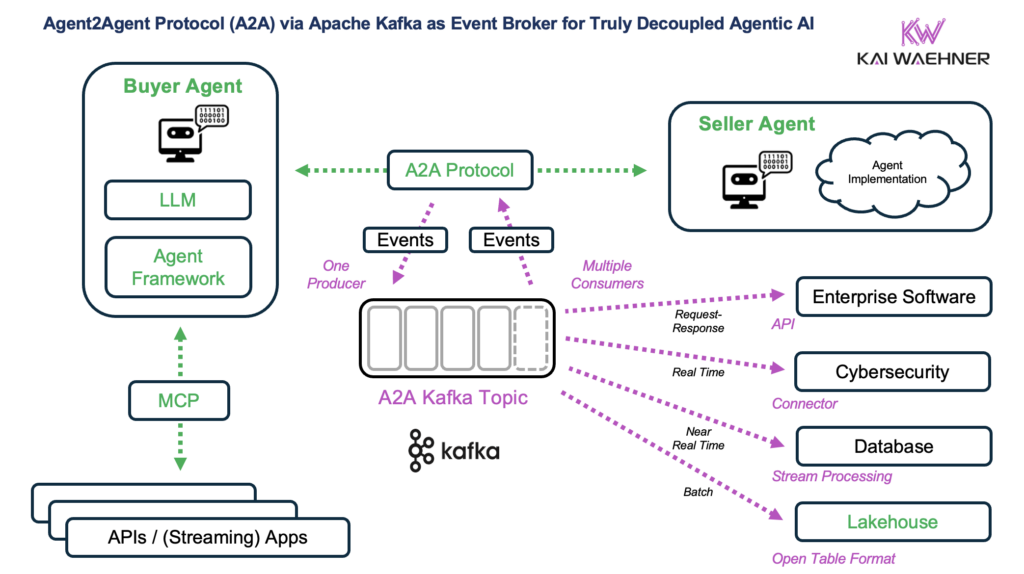
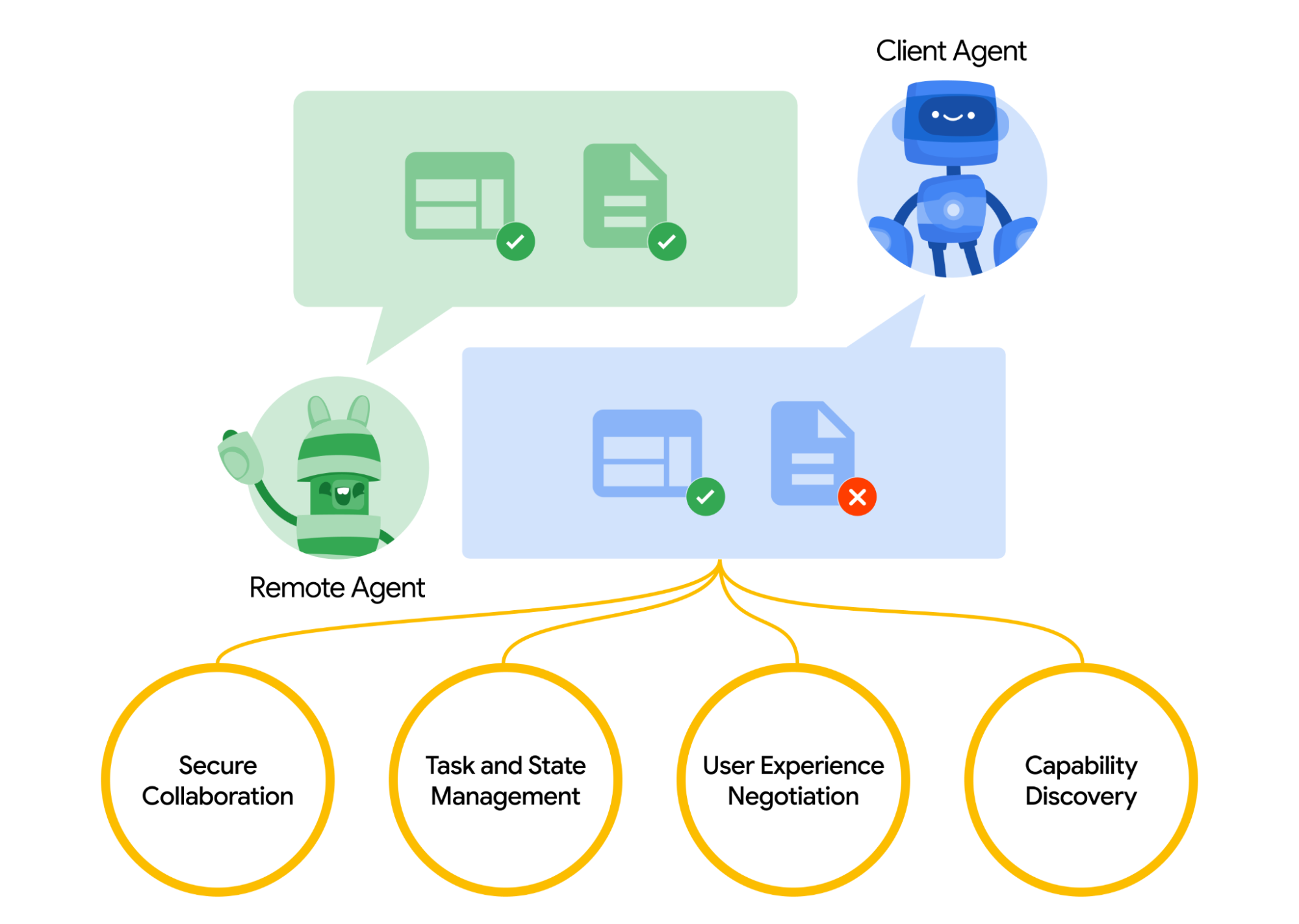
Agent2Agent Protocol (A2A) is an open standard that lets AI agents from different vendors, frameworks, and clouds securely discover each other, advertise capabilities, and collaborate on tasks over a common JSON-based protocol.
[ip41n8]
[yb729o]
[wz2zwz]
[sxh5o3]
For innovation and strategy work, the term applies when you are designing, buying, or integrating agentic AI systems that must interoperate across products, business units, or partner ecosystems, especially in regulated or enterprise environments.
[ip41n8]
[yb729o]
[wz2zwz]
[beoe4s]
It does not apply to internal-only orchestration libraries (like LangChain or crewAI) that coordinate multiple tools or models inside a single codebase without exposing a cross-organizational agent interface.
[yb729o]
[ue1q1y]
[hm3dyc]
An innovation consultant cares because A2A shifts “AI agents” from being siloed product features into networked, pluggable services, changing platform strategy, vendor lock-in dynamics, and how you think about build‑vs‑buy, ecosystem bets, and data governance.
[ip41n8]
[yb729o]
[wz2zwz]
[ue1q1y]
[sxh5o3]
Disambiguation
Primary sense — the innovation-consulting sense
Agent2Agent Protocol (A2A) in innovation contexts refers to an open, Linux-Foundation–hosted communication standard, created by Google in 2025, that enables secure interoperability and collaboration between autonomous AI agents across platforms, vendors, and frameworks.
[ip41n8]
[yb729o]
[wz2zwz]
[sxh5o3]
Other senses
- Also used generically in AI research and engineering to mean any “agent‑to‑agent” communication pattern in multi‑agent systems (e.g., reinforcement learning environments), but these generic uses normally refer to conceptual communication, not the specific A2A open protocol; they are only loosely relevant to innovation work focused on the formal standard. [ue1q1y]
Etymology and Origin
Adjacent Vocabulary
- Synonyms / near-synonyms
- Antonyms / opposing ideas
- Adjacent terms (vault links)
- Model Context Protocol – Anthropic’s open protocol for tool and data access, complementary to A2A’s focus on agent‑to‑agent collaboration. [ue1q1y]
- Agentic AI – broader pattern of systems built around autonomous or semi‑autonomous agents; A2A is designed as core infrastructure for such systems. [wz2zwz] [hm3dyc] [sxh5o3]
- AI Orchestration Frameworks – tools like LangChain or Crew AI that coordinate tools and sub‑agents inside an app; these can sit “above” or “behind” A2A. [yb729o] [hm3dyc]
- Open Standards – governance model and technical approach that underpins A2A’s Linux Foundation stewardship and multi‑vendor adoption. [ip41n8] [wz2zwz] [sxh5o3]
- Enterprise AI – the overall blueprint into which A2A is slotted as a cross‑agent messaging and governance layer. [ip41n8] [yb729o] [beoe4s]
Usage in Practice
- DeepLearning.AI’s course notes frame it as: “A2A provides an open protocol that standardizes how agents discover each other and communicate, launched by Google Cloud in April 2025 and donated to the Linux Foundation.” [sxh5o3]
- IBM, positioning A2A relative to existing frameworks, writes: “While earlier agent orchestration frameworks like crewAI and LangChain automate multi‑agent workflows within their own ecosystems, the A2A protocol acts as a messaging tier that lets these agents ‘talk’ to each other despite their distinct agentic architectures.” [yb729o]
- An Auth0 explainer, contrasting A2A with MCP, characterizes it this way: “Agent‑to‑Agent (A2A) communication… is like agents chatting with each other to figure things out together — sharing goals, dividing up work, and sometimes even debating the best way forward.” [ue1q1y]
- A The Linux Foundation announcement summarizes its purpose as: “The Agent2Agent protocol enables agentic AI interoperability and trusted agent communication across systems and platforms,” highlighting cross‑platform collaboration and trust as first‑class design goals. [wz2zwz]
- A technical explainer video notes that “A2A agents can dynamically discover each other, collaborate via standardized tasks, share multimodal content, handle long‑running processes, and do all of this with enterprise‑grade security,” underscoring its role in complex workflows. [hm3dyc]
Common Misuses