Write a comprehensive one-page article about "Accounting AI".
Model: sonar-pro
Accounting AI: Revolutionizing Finance in the Digital Age
Introduction
Accounting AI refers to the integration of artificial intelligence technologies—like machine learning, natural language processing, and generative AI—into accounting processes to automate tasks, analyze data, and provide actionable insights.
[ho5mo1]
[qxql2r]
Its significance lies in transforming a traditionally manual field into a more efficient, accurate, and strategic discipline, freeing professionals from repetitive work to focus on high-value advisory roles.
[ctut0z]
[5w4bmm]
As businesses face growing data volumes and regulatory complexity, Accounting AI is essential for staying competitive and compliant.
Explainer
At its core, Accounting AI leverages algorithms to mimic human reasoning, processing vast datasets far beyond manual capabilities. It powers tools that automate data entry, extract information from documents via optical character recognition (OCR), and categorize transactions automatically.
[0luj8t]
[5vih6f]
For instance, platforms like Botkeeper use machine learning to reconcile bank accounts and match receipts, slashing bookkeeping time and errors.
[ctut0z]
In tax preparation, AI scans invoices, identifies deductions, and ensures compliance with evolving regulations, as seen in tools from Thomson Reuters that pull from human-edited tax databases.
[ho5mo1]
Practical use cases span the accounting lifecycle. In auditing, AI detects anomalies and flags fraud by monitoring transactions in real-time—Vic.ai, for example, validates details and assesses risks, streamlining audits.
[ctut0z]
[5w4bmm]
Predictive Analytics forecast cash flows and budgets by analyzing historical trends and external factors, enabling firms like those using Docyt to generate customized reports and scenario models.
[cp88u6]
Client advisory services benefit too, with AI dashboards tracking KPIs for strategic guidance.
[ctut0z]
The benefits are clear: increased efficiency, enhanced accuracy, and deeper insights. Automation reduces manual errors in invoice processing and expense management, while AI's pattern recognition uncovers fraud or optimization opportunities humans might miss.
[v0kquw]
[qxql2r]
However, challenges include data privacy concerns, the need for quality training data to avoid biases, and upskilling accountants to oversee AI outputs. Integration with legacy systems can also be hurdles, though benefits often outweigh these with proper implementation.
[5w4bmm]
Current State and Trends
Adoption is surging, with 72% of accounting professionals expecting AI growth over the next three years, per CPA Practice Advisor.
[v0kquw]
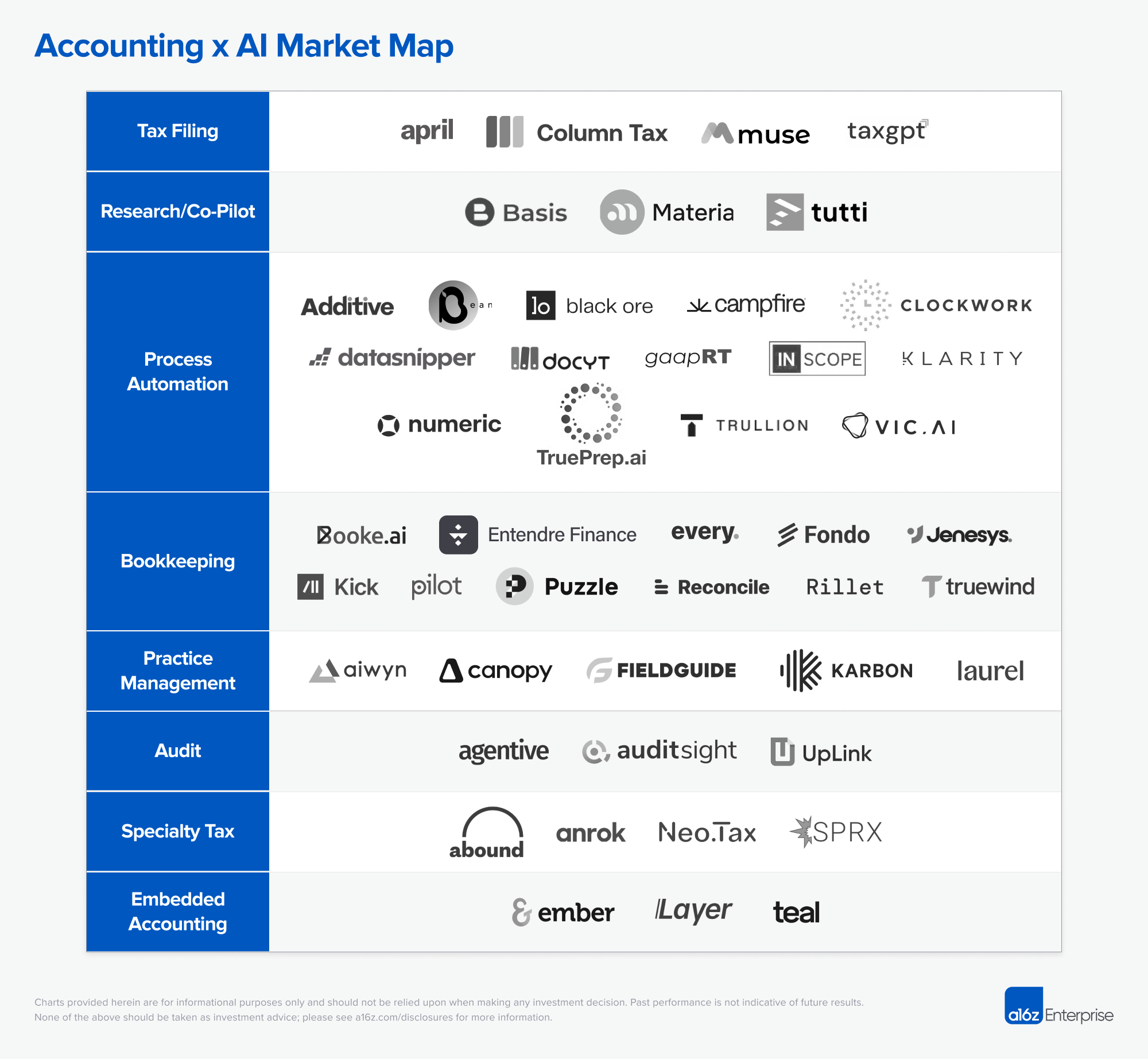
Firms are deploying AI for core functions: 2025 reports from CPA.com highlight widespread use in reporting, audits, and tax, driven by tools like QuickBooks Online, Xero, and specialized platforms such as Trullion for lease accounting and DualEntry for anomaly detection.
[0i0f4m]
[0luj8t]
Key players include Thomson Reuters for tax research, Vic.ai for AP automation, and Botkeeper for bookkeeping, reflecting a market blending established ERP giants with AI natives.
[ho5mo1]
[ctut0z]
[cp88u6]
Trends show a shift toward generative AI for summarizing contracts and drafting reports, alongside agentic AI that autonomously handles workflows like journal entries.
[0luj8t]
Real-time monitoring and compliance tools are booming, with fraud detection use expected to triple by 2026.
[qxql2r]
Future Outlook
Looking ahead, agentic AI will dominate, autonomously planning and executing full workflows—from variance analysis to regulatory summaries—boosting productivity further.
[0luj8t]
Enhanced GenAI will personalize forecasts and tax strategies, while integration with blockchain could revolutionize audit trails. The impact? Accountants evolve into strategic advisors, with firms scaling efficiently amid global regulations, though ethical AI governance will be key to mitigating risks like over-reliance.
Conclusion
Accounting AI automates drudgery, sharpens insights, and unlocks strategic potential across bookkeeping, audits, tax, and forecasting. As it matures, it promises a more innovative profession—embrace it to thrive in tomorrow's data-driven world.