


Out Cooperate The Competition
(2025-08-16T14:21.663Z)
Perplexity Deep Research Query
(2025-08-16T14:21
.663Z)
Question:
How can "out-cooperate the competition" be a competitive advantage in private markets finance like private equity and venture capital?
Deep Research Analysis :
Out-Cooperating the Competition: The Strategic Power of Collaboration in Private Markets Finance
This comprehensive analysis reveals how cooperation has emerged as a paradoxically powerful competitive strategy in private markets finance, particularly within private equity and venture capital. The concept of "out-cooperating the competition" represents a fundamental shift from traditional zero-sum thinking to value-creating collaborative approaches that benefit multiple stakeholders simultaneously.
Through examination of foundational game theory research, pioneering work by scholars like Adam Brandenburger, Barry Nalebuff, and Robert Axelrod, and practical applications in private markets, this report demonstrates how strategic cooperation creates sustainable competitive advantages. Key findings indicate that private equity firms and venture capital organizations increasingly leverage collaborative structures such as co-investments, consortium deals, knowledge-sharing partnerships, and buy-and-build strategies to access superior deal flow, enhance due diligence capabilities, and maximize value creation potential.
The evidence suggests that firms successfully implementing cooperative strategies consistently outperform their purely competitive counterparts by expanding market opportunities, reducing transaction costs, pooling specialized expertise, and creating virtuous cycles of mutual benefit that compound over time.
The Theoretical Foundations of Strategic Cooperation
From Evolutionary Biology to High Finance
The intellectual framework underlying cooperation as a competitive strategy draws heavily from game theory and evolutionary biology, challenging conventional wisdom about the primacy of competition in business success.
Robert Axelrod's groundbreaking research, detailed in "The Evolution of Cooperation," fundamentally altered our understanding of when and why cooperation emerges as the optimal strategy.
[225e7q]
[utehd0]
Through his famous Computer Prisoners Dilemma Tournament in 1980, Axelrod discovered that the simplest cooperative strategy, "Tit for Tat," consistently outperformed more aggressive competitive approaches.
[225e7q]
[utehd0]
This strategy, which cooperates on the first move and then reciprocates whatever the other player did on the previous move, demonstrated that cooperation, not unfettered competition, often represents our best chance for survival and success.
[225e7q]
The tournament results revealed several crucial insights that directly apply to private markets finance.
- strategies that attempted to gain short-term advantages through deception or aggression generally performed poorly against cooperative strategies working together. [utehd0] This finding has profound implications for private equity and venture capital firms, where long-term relationships and repeat interactions are fundamental to success.
Axelrod's work established that cooperation can emerge and persist even in environments where self-interest appears to dominate.
[utehd0]
The key conditions include the shadow of the future (repeated interactions), the ability to recognize and remember past behavior, and mechanisms for reciprocating both cooperation and defection.
[utehd0]
These conditions perfectly describe the private markets ecosystem, where reputation, long-term relationships, and repeated transactions create an environment conducive to cooperative strategies.
Building upon Axelrod's foundation, the concept of "coopetition" emerged in the 1990s through the pioneering work of Adam Brandenburger and Barry Nalebuff .
[klg08v]
[fc673m]
[90t4li]
Their seminal book " Co-opetition - A Revolutionary Mindset that Combines Competition and Cooperation " introduced a systematic framework for understanding when businesses should cooperate with competitors and when they should compete.
[fc673m]
[90t4li]
The authors used game theory to demonstrate that many business situations are not zero-sum games where one party's gain necessarily means another's loss.
[fc673m]
[jbeh1e]
Instead, they showed how companies could create value through cooperation while simultaneously competing for the division of that value.
[fc673m]
The coopetition framework identifies specific conditions under which cooperation becomes strategically advantageous. According to Brandenburger and Nalebuff's analysis, companies should consider cooperation when they can expand the overall market size, reduce costs through shared resources, access complementary capabilities, or create barriers to entry for other competitors.
[fc673m]
This framework has particular relevance for private markets, where firms often face similar challenges in sourcing deals, conducting due diligence, and adding value to portfolio companies.
Game Theory Applications in Private Markets Strategy
The application of game theory principles to private markets finance reveals why cooperative strategies often outperform purely competitive approaches. Barry Nalebuff's work at Yale School of Management has been instrumental in translating academic game theory into practical business applications.
[jbeh1e]
Through his consulting work with Fortune 500 companies and his development of systematic approaches to business strategy, Nalebuff demonstrated how game theory provides a framework for making better strategic choices in rapidly changing environments.
[jbeh1e]
Nalebuff's approach begins with a comprehensive mapping of the game elements: players, rules, perceptions, boundaries, and linkages.
[jbeh1e]
This systematic analysis helps leaders understand the full consequences of their strategic decisions and identify opportunities to reframe their competitive environment.
[jbeh1e]
In private markets, this methodology proves particularly valuable because it helps firms recognize when cooperation can create more value than competition.
The transition from Zero-Sum to plus-sum thinking represents a fundamental shift in strategic mindset for private markets participants.
[klg08v]
In zero-sum scenarios, one party's success necessarily comes at another's expense, leading to win-lose outcomes.
[klg08v]
However, plus-sum games create situations where multiple parties can simultaneously benefit from collaboration, resulting in win-win scenarios.
[klg08v]
This shift is particularly relevant in private markets, where the complexity and scale of investments often exceed what individual firms can handle effectively alone.
Research by Joshua Gans, David Hsu, and Scott Stern provides additional insight into when cooperation strategies outperform competitive approaches.
[y0k3ye]
Their study of 118 entrepreneurs across five economic sectors identified three key conditions favoring cooperative strategies: strong intellectual property rights, low transaction costs, and high sunk costs for market entry.
[y0k3ye]
These conditions frequently exist in private markets, where proprietary deal sourcing capabilities, established networks, and significant capital requirements create natural incentives for cooperation.
The intellectual property condition is particularly relevant for private equity and venture capital firms, which often develop specialized expertise, proprietary analytical frameworks, and unique market insights.
[y0k3ye]
When firms possess strong intellectual property in the form of specialized knowledge or exclusive relationships, they can leverage these assets more effectively through cooperative arrangements than by competing directly.
[y0k3ye]
This dynamic explains why many successful private markets firms actively share certain types of information and expertise while maintaining competitive advantages in other areas.
Coopetition Strategy Implementation in Private Markets
The practical implementation of coopetition strategies in private markets has evolved significantly over the past two decades, driven by increasing deal sizes, market complexity, and the recognition that collaborative approaches often generate superior outcomes. The coopetition model comprises a network of stakeholders and competitors working together to acquire the highest value, representing a fundamental departure from traditional winner-takes-all mentalities.
[klg08v]
Modern private markets demonstrate numerous examples of successful coopetition implementation. One prominent approach involves consortium investing, where multiple private equity firms collaborate on large buyout transactions that exceed the capacity or risk tolerance of individual participants.
[w35mg3]
These arrangements allow firms to access larger deals while sharing due diligence costs, reducing individual risk exposure, and combining complementary expertise.
[w35mg3]
The collaborative structure often creates more value than any single firm could achieve independently, while still allowing participants to maintain their competitive positions in other areas.
Knowledge sharing represents another crucial dimension of coopetition in private markets. According to industry participants, speaking with other asset owners who have different perspectives provides tremendous learning experiences about current deal structuring ideas, fee terms, and governance approaches.
[w35mg3]
When firms combine their collective knowledge, they become more attractive partners to managers and more effective at structuring terms that ultimately lead to stronger performance outcomes.
[w35mg3]
This knowledge-sharing dynamic creates a virtuous cycle where successful limited partners band together to gain access to top-tier general partners, creating more success among participants and perpetuating the collaborative cycle.
[w35mg3]
The geographic dimension of coopetition provides additional strategic advantages, particularly for firms located outside major financial centers.
[w35mg3]
Partnerships with other asset owners enable access to expertise and talent that may not be readily available locally, while also providing broader geographic reach for accessing global deal flow.
[w35mg3]
This geographic arbitrage through cooperation helps explain the success of structures like Capital Constellation, which can access global opportunities through their collaborative network.
[w35mg3]
Specialization benefits represent another compelling rationale for coopetition in private markets. Research demonstrates significant outperformance by specialized firms compared to generalist approaches, with industry analyses showing specialists outperforming generalists by approximately 15-20% on a return multiple basis.
[w35mg3]
When firms combine their specialized knowledge through cooperative arrangements, they can achieve levels of expertise and market coverage that would be difficult or impossible to develop independently.
Private Equity Collaborative Models and Value Creation
Private equity firms have developed sophisticated collaborative models that leverage coopetition principles to enhance value creation across multiple dimensions. The buy-and-build strategy exemplifies how cooperation can create competitive advantages, with firms paying premiums of up to 47% at entry when portfolio companies acquire add-ons in the same industry within two years of the initial buyout.
[bhtl5c]
This willingness to pay premiums reflects the anticipated synergistic value creation from collaborative growth strategies.
The mechanics of private equity collaboration extend beyond individual deals to encompass broader strategic partnerships. Recent examples include complex arrangements between private equity firms and corporations, such as TPG and AmerisourceBergen's joint acquisition of OneOncology for $2.1 billion, where TPG acquired a majority interest while AmerisourceBergen retained 35% ownership.
[zp6i1h]
These structures allow corporations to avoid consolidating targets in their financial reporting while providing strategic benefits to both parties.
[zp6i1h]
Revenue synergies represent a primary source of value creation in private equity collaborative models.
[h88hox]
These synergies occur when combined entities increase top-line performance by expanding market reach, cross-selling products, or improving pricing power.
[h88hox]
Private equity sponsors often pursue add-on acquisitions that open new distribution channels, add complementary offerings, or unlock access to new customer segments.
[h88hox]
Successful implementation requires aligning go-to-market strategies, integrating sales teams, and streamlining customer onboarding processes.
[h88hox]
Cost synergies provide another significant value creation opportunity through collaborative approaches.
[h88hox]
These benefits result from eliminating redundancies, consolidating functions, and achieving operational scale.
[h88hox]
Firms reduce overlapping roles, centralize procurement, and integrate back-office systems to drive efficiency.
[h88hox]
The Kraft-Heinz merger, backed by 3G Capital and Berkshire Hathaway, exemplifies successful cost synergy realization, producing hundreds of millions in annual savings through consolidating manufacturing, reducing selling, general and administrative expenses, and centralizing operations.
[h88hox]
The trend toward GP stakes deals represents another evolution in private equity collaboration, with fundraising for such transactions increasing at an 11% annual rate since 2011, exceeding $70 billion in 2021.
[w35mg3]
These arrangements, where general partners sell stakes in their management companies to other limited partners or general partners, reflect growing interest in alignment and collaboration.
[w35mg3]
Notable examples include CalPERS' investment in Carlyle and more recent investments by Wafra and Capital Constellation, indicating clear momentum toward increased collaboration in private markets.
[w35mg3]
Venture Capital Cooperation Strategies
Venture capital firms have developed distinct approaches to cooperative competition that reflect the unique characteristics of early-stage investing. The collaborative investing model in venture capital demonstrates how pooling resources and sharing expertise can generate superior outcomes for all participants.
[t7slpb]
Angel investor networks exemplify this approach, where experienced investors combine resources to invest in startups while benefiting from shared pipeline sourcing and due diligence processes.
[t7slpb]
The benefits of collaborative venture capital investing extend beyond simple resource pooling to encompass access to high-potential opportunities that might not be available to individual investors.
[t7slpb]
These groups often maintain extensive networks and strategic advisors who help identify promising ventures, providing early access to innovative startups before they become widely known.
[t7slpb]
This early access advantage proves crucial for securing investments in high-growth companies and generating superior returns.
Knowledge transfer represents a particularly valuable aspect of venture capital cooperation, given the specialized nature of early-stage investing and the importance of sector expertise.
[t7slpb]
Collaborative networks enable members to share insights about market trends, technology developments, regulatory changes, and investment strategies that might take years to develop independently.
[t7slpb]
This knowledge sharing accelerates learning curves and helps participants avoid common pitfalls while identifying emerging opportunities.
The diversification benefits of collaborative venture capital investing allow participants to spread risk more effectively across multiple investments and sectors.
[t7slpb]
Individual investors might only have capacity for a limited number of investments, constraining their ability to achieve adequate diversification.
[t7slpb]
Through collaborative structures, participants can access broader portfolios while reducing individual exposure to any single investment's performance.
[t7slpb]
Risk mitigation represents another crucial advantage of cooperative venture capital strategies, particularly given the high failure rates typical in early-stage investing.
[t7slpb]
By sharing due diligence responsibilities and combining different perspectives on potential investments, collaborative groups can make more informed decisions and avoid investments that individual participants might have pursued independently.
[t7slpb]
This collective intelligence approach often identifies red flags or concerns that might escape individual analysis.
Corporate-Private Equity Partnership Models
The emergence of sophisticated partnership models between corporations and private equity firms represents a significant evolution in private markets collaboration.
[zp6i1h]
These arrangements typically involve private equity firms taking majority positions while corporations retain meaningful minority stakes, allowing corporations to avoid consolidating targets in their financial reporting while gaining strategic benefits.
[zp6i1h]
Recent transaction examples illustrate the diversity and sophistication of these collaborative models. The Cardinal Health contribution of its Outcomes business to Transaction Data Systems, a portfolio company of BlackRock Long Term Private Capital and GTCR, demonstrates how corporations can contribute assets while retaining minority stakes in combined entities.
[zp6i1h]
This structure enhanced TDS's digital capabilities in patient engagement, virtual verification, order grouping, and pill counting, creating an expanded suite of pharmacy workflow software that benefits all parties.
[zp6i1h]
The American International Group and Stone Point Capital formation of Private Client Select Insurance Services represents another innovative collaborative structure.
[zp6i1h]
Under this arrangement, AIG's Private Client Group was moved and rebranded to a new independent platform focusing on high and ultra-high net worth clients, allowing AIG to maintain involvement while leveraging Stone Point's expertise in building specialized insurance platforms.
[zp6i1h]
Keurig Dr Pepper's strategic partnership with Nutrabolt illustrates how collaborative arrangements can provide both financial returns and strategic benefits.
[zp6i1h]
KDP's $863 million investment resulted in approximately 30% ownership of Nutrabolt while establishing a long-term arrangement to sell and distribute Nutrabolt's C4 Energy beverage.
[zp6i1h]
This structure provided complete liquidity for previous investor MidOcean Partners while giving KDP strategic access to the growing energy drink market.
[zp6i1h]
The rationales for these corporate-private equity partnerships encompass multiple strategic objectives.
[zp6i1h]
They provide partial or complete liquidity to earlier investors while potentially supplying growth capital for add-on acquisitions.
[zp6i1h]
They introduce larger strategic partners who can provide distribution capabilities, access to existing customer bases, or manufacturing capabilities.
[zp6i1h]
Private equity partners can provide the expertise needed to create true stand-alone entities, particularly valuable in corporate carve-out investments.
[zp6i1h]
Thought Leaders and Foundational Literature
The intellectual foundation for cooperation as competitive strategy draws from several pioneering scholars and practitioners whose work continues to influence private markets practice. Adam Brandenburger and Barry Nalebuff's "Co-opetition: A Revolutionary Mindset that Combines Competition and Cooperation" remains the seminal work in this field, introducing systematic frameworks for analyzing when cooperation creates more value than competition.
[fc673m]
[90t4li]
[7vevz4]
Brandenburger, currently J.P. Valles Professor at New York University's Stern School of Business and former Harvard Business School professor, has focused his research on game theory applications to business strategy.
[7vevz4]
His work with Nalebuff created a comprehensive methodology for identifying opportunities where competitors can collaborate to expand markets while continuing to compete for market share.
[fc673m]
Their book has been translated into more than a dozen languages and continues to serve as a practical guide for businesses navigating cooperative competition strategies.
[7vevz4]
Barry Nalebuff's contributions extend beyond the co-opetition concept to encompass broader applications of game theory in business decision-making.
[jbeh1e]
His work at Yale School of Management and his practical experience building Honest Tea into a successful operation demonstrate how academic theories can be translated into real-world business success.
[jbeh1e]
Nalebuff's consulting work with Fortune 500 companies has helped establish game theory as a practical tool for strategic decision-making rather than merely an academic curiosity.
[jbeh1e]
Robert Axelrod's "The Evolution of Cooperation" provides the theoretical foundation for understanding why cooperative strategies often outperform competitive approaches.
[225e7q]
[utehd0]
His Computer Prisoners Dilemma Tournament results demonstrated that simple cooperative strategies like "Tit for Tat" consistently defeat more complex competitive strategies.
[225e7q]
[utehd0]
This work has been cited hundreds of times annually and continues to influence strategic thinking across multiple disciplines.
[utehd0]
Roger Fisher and William Ury's "Getting to Yes: Negotiating Agreement Without Giving In" contributes important insights about principled negotiation that supports cooperative approaches.
[trfls1]
[58f7z2]
Their Harvard Negotiation Project methodology emphasizes separating people from problems, focusing on interests rather than positions, generating options for mutual gain, and using objective criteria for evaluation.
[trfls1]
[58f7z2]
These principles align closely with cooperative competition strategies and provide practical tools for implementing collaborative approaches.
The academic literature on coopetition has expanded significantly since these foundational works, with scholars examining various aspects of cooperative competition across different industries and contexts.
[4mze1u]
[uxzdb5]
Lund University research has identified specific drivers, challenges, and outcomes of coopetitive relationships, providing empirical evidence for the effectiveness of these strategies.
[uxzdb5]
This research has found that having common goals, previous experience that establishes trust, and certain market characteristics support successful coopetition.
[uxzdb5]
Challenges and Implementation Considerations
Despite the clear theoretical and practical advantages of cooperative strategies, private markets participants face significant challenges in implementing effective coopetition approaches. Trust and confidentiality concerns represent perhaps the most fundamental obstacles, as engaging with competitors requires careful balance between collaboration and protecting proprietary information.
[w7mfh2]
Organizations must develop sophisticated governance structures and legal frameworks to enable information sharing while safeguarding competitive secrets.
The challenge of managing conflicting objectives requires careful attention to strategic alignment between partners.
[w7mfh2]
Competitors must collaborate on common goals while maintaining competitive advantages in other areas, demanding clear communication, detailed agreements, and transparent governance mechanisms.
[w7mfh2]
This balance proves particularly delicate in private markets, where firms often compete for the same deals while collaborating on others.
Cultural and organizational differences present another significant implementation challenge.
[w7mfh2]
Coopetition involves collaborating with organizations that may have different cultures, values, and operating procedures.
[w7mfh2]
Overcoming these differences requires proactive establishment of effective communication channels and fostering cooperative mindsets throughout the organizations.
[w7mfh2]
Leadership commitment and cultural change management become crucial success factors for sustainable cooperative relationships.
The research conducted at Lund University identified additional specific challenges in coopetition implementation.
[uxzdb5]
Determined employees who resist collaborative approaches and existing governance structures that favor competitive behaviors can undermine cooperative initiatives.
[uxzdb5]
Organizations must address these internal obstacles through training, incentive alignment, and structural changes that support collaborative behaviors.
[uxzdb5]
Decision-making processes represent another potential negative outcome of coopetitive relationships.
[uxzdb5]
When multiple organizations must collaborate on decisions, the complexity and time required can increase significantly, potentially slowing response times and reducing agility.
[uxzdb5]
Organizations must develop efficient collaborative decision-making processes that capture the benefits of multiple perspectives without sacrificing speed or effectiveness.
The temporal dimension of cooperation creates additional complexity, as the benefits of collaborative approaches may take time to materialize while competitive pressures demand immediate results.
[uxzdb5]
Organizations must maintain commitment to cooperative strategies even when short-term competitive approaches might appear more attractive, requiring strong leadership and long-term vision to sustain collaborative initiatives through challenging periods.
Sectoral Applications and Success Factors
Different sectors within private markets demonstrate varying approaches to cooperative competition, reflecting unique industry characteristics and competitive dynamics. The infrastructure investing sector exemplifies successful coopetition implementation, where the large scale and long-term nature of investments naturally encourage collaborative approaches. Infrastructure funds often form consortiums to bid on major projects, sharing due diligence costs, risk exposure, and management responsibilities while bringing complementary expertise to complex investments.
Healthcare investing represents another sector where cooperative approaches generate significant value creation opportunities. The complexity of healthcare regulations, the importance of clinical expertise, and the extended development timelines for many healthcare investments encourage collaboration between firms with complementary capabilities. Some healthcare-focused private equity firms actively share research and development insights, regulatory expertise, and clinical trial data to accelerate portfolio company development while maintaining competitive positions in deal sourcing and execution.
Technology investing demonstrates more complex cooperative dynamics, given the rapid pace of innovation and the importance of proprietary insights. However, even in this competitive sector, firms find opportunities for collaboration in areas such as talent recruitment, market development, and technical due diligence. The rise of venture capital syndicates and the common practice of follow-on investments by multiple firms illustrate how cooperation can coexist with competition in technology investing.
Real estate private equity has developed sophisticated collaborative models, particularly in large-scale development projects and cross-border investments. International real estate investments often require local expertise and relationships that encourage partnerships between domestic and foreign firms. These collaborative arrangements allow participants to access new markets while sharing risks and combining complementary capabilities.
The success factors for effective coopetition implementation appear consistent across sectors. Clear delineation of collaborative and competitive domains helps prevent conflicts and maintains trust between partners. Formal governance structures with defined decision-making processes, dispute resolution mechanisms, and exit provisions provide frameworks for managing collaborative relationships. Regular communication and relationship management ensure that cooperative arrangements remain effective as market conditions and strategic priorities evolve.
Measuring Cooperative Advantage Performance
Evaluating the effectiveness of cooperative strategies in private markets requires sophisticated performance measurement approaches that capture both quantitative returns and qualitative benefits. Traditional performance metrics such as internal rate of return and multiple of invested capital provide important baseline measures, but they may not fully capture the value created through cooperative approaches.
Access metrics represent one important dimension of cooperative advantage measurement. Firms pursuing collaborative strategies should track their access to high-quality investment opportunities, including early access to competitive deals, invitation rates to exclusive processes, and the quality of their deal pipelines compared to purely competitive firms. These metrics help quantify the relationship benefits that cooperative approaches generate.
Risk-adjusted return measures provide another crucial perspective on cooperative strategy effectiveness. Collaborative approaches often reduce portfolio risk through diversification, shared due diligence, and risk mitigation strategies. Measuring returns on a risk-adjusted basis helps isolate the value created through cooperation from general market performance or firm-specific advantages.
Cost efficiency metrics capture the operational benefits of cooperative strategies, including reduced due diligence expenses, shared research costs, and economies of scale in back-office functions. These cost savings directly impact net returns and demonstrate the financial benefits of collaborative approaches beyond pure investment performance.
Knowledge transfer and capability development represent important qualitative benefits that may not immediately appear in financial metrics but create long-term competitive advantages. Firms should track their learning and development outcomes, including new expertise gained through collaborative relationships, expanded networks, and enhanced capabilities that position them for future success.
Relationship quality metrics help assess the sustainability and effectiveness of cooperative partnerships. These measures might include partner satisfaction scores, relationship longevity, expansion of collaborative activities over time, and the ability to attract new high-quality partners to existing cooperative networks.
Future Trends and Evolution
The trajectory of cooperation in private markets suggests continued evolution toward more sophisticated collaborative models driven by technological advancement, regulatory changes, and market maturation. Digital platforms and data analytics capabilities are enabling new forms of cooperation that were previously impossible or impractical, creating opportunities for virtual collaboration that transcends geographic boundaries and traditional relationship constraints.
Regulatory developments, particularly in areas such as data privacy, environmental sustainability, and social responsibility, are creating new incentives for cooperative approaches. Firms that collaborate on regulatory compliance, sustainability initiatives, and social impact measurement can achieve better outcomes while sharing costs and expertise. These regulatory trends suggest that cooperation will become increasingly important for maintaining competitive positions in evolving market environments.
The rise of secondary market activity provides another catalyst for increased cooperation in private markets.
[w35mg3]
GP-led secondary transaction volume has nearly tripled in recent years, reaching $68 billion in 2021.
[w35mg3]
These transactions often require complex structuring and multiple participant coordination, naturally encouraging cooperative approaches among market participants.
Environmental, social, and governance considerations are driving new forms of cooperation as limited partners increasingly demand responsible investing approaches. Private equity and venture capital firms are developing shared standards, collaborative research initiatives, and joint monitoring systems to address ESG requirements more effectively than individual approaches might allow.
Technology sector developments, particularly in areas such as artificial intelligence, blockchain, and data analytics, create both opportunities and challenges for cooperative strategies. These technologies enable new forms of collaboration through improved information sharing, automated due diligence processes, and enhanced monitoring capabilities. However, they also create new forms of competitive advantage that may require different approaches to cooperation and competition balance.
The globalization of private markets continues to drive demand for collaborative approaches as firms seek access to international opportunities while managing cross-border complexity. Regulatory differences, cultural variations, and local market knowledge requirements create natural incentives for partnership approaches that combine global capabilities with local expertise.
Risk Management Through Cooperative Strategies
Cooperative approaches in private markets provide sophisticated risk management benefits that extend beyond simple diversification effects. Collaborative due diligence processes enable more comprehensive risk assessment by combining multiple perspectives, analytical approaches, and expertise areas. When several firms contribute to due diligence efforts, the collective analysis often identifies risks that individual firms might overlook or underestimate.
Portfolio construction benefits from cooperative strategies through enhanced diversification opportunities and risk spreading mechanisms. Collaborative investment vehicles allow participants to access broader opportunity sets while maintaining appropriate risk exposures across sectors, geographies, and investment stages. This diversification proves particularly valuable during market downturns when concentrated portfolios may experience significant losses.
Operational risk mitigation represents another important benefit of cooperative private markets strategies. Shared back-office functions, combined compliance efforts, and joint monitoring systems help reduce operational risks while improving efficiency. These collaborative approaches prove particularly valuable for smaller firms that may lack resources to develop comprehensive operational risk management capabilities independently.
Counterparty risk management benefits from cooperative approaches through enhanced due diligence on management teams, improved monitoring capabilities, and shared intelligence about market participants. When firms collaborate on portfolio company oversight and management team evaluation, they can make more informed decisions about partnership opportunities and risk exposures.
Market risk management through cooperative strategies includes collaborative market research, shared economic analysis, and joint scenario planning efforts. These activities help participants better understand market dynamics and prepare for various economic scenarios more effectively than individual analysis might allow.
Regulatory risk management increasingly requires cooperative approaches as compliance requirements become more complex and costly. Shared compliance systems, joint regulatory monitoring, and collaborative government relations efforts help participants manage regulatory risks more effectively while reducing individual compliance costs.
Global Perspectives on Cooperative Competition
International differences in private markets structure and regulation create varying approaches to cooperative competition across different jurisdictions. European private markets demonstrate more formalized cooperation structures, partly reflecting regulatory frameworks that encourage collaborative approaches and cultural preferences for consensus-building decision-making processes.
Asian private markets exhibit different cooperative patterns, often reflecting family business traditions, government policy preferences, and cultural values that emphasize relationship-building and long-term thinking. These cultural factors support cooperative approaches while creating different implementation challenges and success factors compared to Western markets.
Emerging markets present unique opportunities and challenges for cooperative private markets strategies. Limited local expertise, regulatory uncertainty, and currency risks create natural incentives for collaborative approaches that combine international capital with local knowledge. However, these same factors also create implementation challenges for cooperative strategies that may be more easily executed in developed markets.
Cross-border cooperation in private markets continues to evolve as firms seek access to global opportunities while managing international complexity. Joint ventures between firms from different countries allow participants to combine their respective advantages while sharing risks and learning from different market approaches.
Regulatory harmonization efforts, such as those undertaken by the European Union and various bilateral trade agreements, facilitate cooperative approaches by reducing regulatory barriers and creating more uniform operating environments. These developments suggest that cooperative strategies may become increasingly important for firms seeking to compete effectively in global markets.
Cultural adaptation requirements for international cooperative strategies demand sophisticated relationship management and cultural intelligence capabilities. Successful international cooperation requires understanding of different business cultures, decision-making processes, and relationship-building approaches that may vary significantly across jurisdictions.
Conclusion
The comprehensive analysis presented demonstrates that "out-cooperating the competition" represents a sophisticated and increasingly important strategic approach in private markets finance. The convergence of game theory principles, empirical evidence from successful implementations, and evolving market dynamics clearly supports the proposition that cooperative strategies can generate sustainable competitive advantages in private equity and venture capital contexts.
The theoretical foundation established by scholars such as Robert Axelrod, Adam Brandenburger, and Barry Nalebuff provides compelling evidence that cooperative strategies often outperform purely competitive approaches, particularly in environments characterized by repeated interactions, relationship importance, and complex value creation opportunities. These conditions perfectly describe modern private markets, where reputation, long-term relationships, and sophisticated value creation strategies determine success.
Practical applications of cooperative strategies in private markets demonstrate significant value creation opportunities through consortium investing, knowledge sharing partnerships, buy-and-build strategies, and corporate-private equity collaborations. These approaches enable participants to access superior deal flow, enhance due diligence capabilities, achieve operational synergies, and create virtuous cycles of mutual benefit that compound over time.
The implementation challenges associated with cooperative strategies, while significant, prove manageable through sophisticated governance structures, clear delineation of collaborative and competitive domains, and commitment to relationship management. Organizations that successfully navigate these challenges position themselves to capture the substantial benefits available through cooperative approaches while maintaining competitive advantages in appropriate areas.
The evolution toward more sophisticated collaborative models appears likely to continue, driven by technological advancement, regulatory developments, globalization trends, and increasing recognition of cooperation's strategic value. Private markets participants who develop capabilities in cooperative competition implementation will likely enjoy significant advantages over firms that rely exclusively on traditional competitive approaches.
The measurement and evaluation of cooperative strategy effectiveness requires comprehensive frameworks that capture both quantitative performance metrics and qualitative relationship benefits. Organizations must develop sophisticated approaches to measuring cooperative advantage that account for access benefits, risk mitigation, cost efficiency, knowledge transfer, and long-term capability development.
Future success in private markets will likely depend increasingly on the ability to balance cooperation and competition effectively, creating value through collaborative approaches while maintaining competitive positions in appropriate contexts. The firms that master this balance will be best positioned to succeed in an increasingly complex and interconnected global private markets environment where the ability to "out-cooperate the competition" provides sustainable competitive advantages.
(2025-08-17T15:13.846Z)
Perplexity Query
(2025-08-17T15:13
.846Z)
Question:
Please detail the global movement of "accelerators" following the template of Y-Combinator and TechStars. Discuss notable accelerators in new geographies, and link to their sites and media coverage.
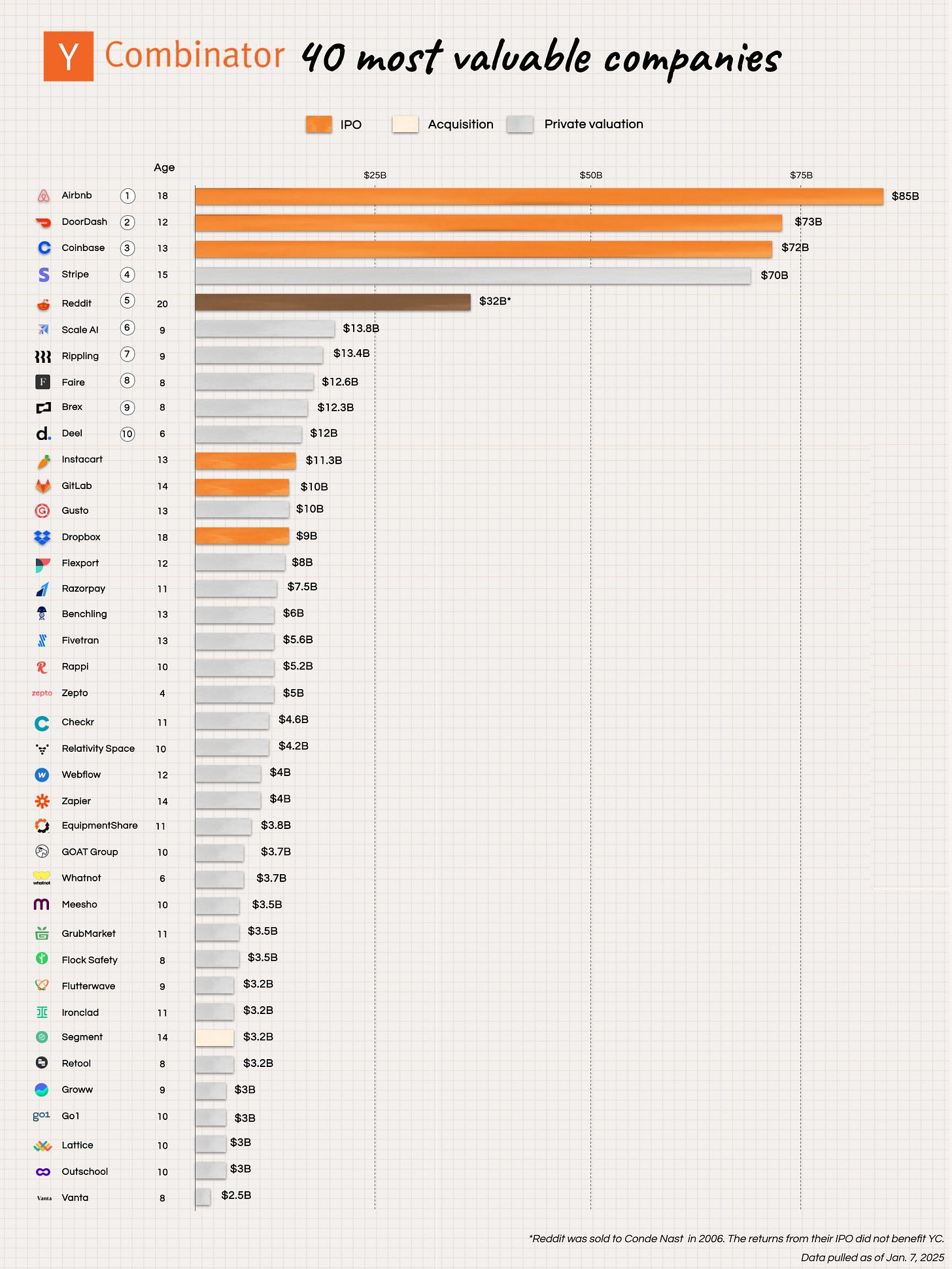
Image References:
Please include the following image references throughout your response where appropriate:
-
-

-
 Model: sonar-pro
Response from sonar-pro :
Startup accelerators modeled after Y Combinator and TechStars have proliferated globally, adapting their frameworks to new markets and sectors while fueling entrepreneurial ecosystems far beyond Silicon Valley. [1][3] Notable accelerators in emerging geographies now serve as local hubs for innovation, offering mentorship, funding, and access to networks based on these pioneering templates.
The Y Combinator and TechStars Template
Y Combinator (YC), established in Silicon Valley, and TechStars , founded in Boulder and now global, are archetypes of the seed accelerator model:
- YC emphasized a focused, intensive program culminating in a "Demo Day," with a strong Silicon Valley network and track record (Stripe, Airbnb, Coinbase)[5].
- TechStars distinguished itself by its mentorship-driven, localized cohorts, offering intensive resources in global hubs, and fostering community-led innovation[1][3][4].
Key elements defining both:
- Intensive 3-month programs
- Small equity investment (typically 6-7%)
- Extensive mentorship and networks
- Culminating Demo Day for investors
(Imagine a map showing the global spread of accelerator programs, with icons representing Y Combinator, TechStars, and regional accelerators in diverse countries.) Global Expansion and Local Adaptation
The model pioneered by YC and TechStars has been adapted worldwide. Accelerators now anchor startup communities in dozens of cities, often with local or sector focus:
United States and Europe
- TechStars now runs 50+ accelerators in places like New York, Seattle, London, Paris, and Oslo, each tailored to local markets and industries such as fintech, healthcare, sports tech, and more[3][4].
- Strong local mentor networks and hybrid (virtual/in-person) programs increase geographic diversity and inclusion.
Notable New Geographies and Local Leaders
| Region | Notable Accelerator | Description / Focus / Media Coverage | Site |
| Africa | MEST (Ghana) | Offers training and seed funding for African tech entrepreneurs. Supported startups now scale across the continent. | meltwater.org |
| Latin America | Start-Up Chile | Backed by the Chilean government to attract global founders. Model inspired by YC, has driven regional innovation boom. | startupchile.org |
| South Asia | GSF Accelerator (India) | Connects Indian startups to global mentors and capital; structured after Western models but focused on India's ecosystem. | gsfaccelerator.com |
| Middle East | Flat6Labs (Egypt, MENA) | Bridge for MENA startups; similar intensive cohort, seed investment, and mentorship-driven approach. | flat6labs.com |
| China | Chinaccelerator | First and top-ranked “Western style” accelerator in mainland China, part of SOSV; strong cross-border focus. | chinaccelerator.com |
| Europe | Seedcamp (UK/EU) | Modeled on YC, Seedcamp has built pan-Europe reach, investing early and connecting founders to a strong network. | seedcamp.com |
| Southeast Asia | Antler (Singapore/Global) | Though newer, Antler adapts the cohort model across global outposts, emphasizing pre-idea team formation and funding. | antler.co |
(Imagine a photo of a demo day in Nairobi, Mumbai, or Santiago, with founders pitching to a room of regional investors.) Media Coverage and Influence
- Start-Up Chile is often cited in global tech press as a template for government-backed accelerators, spurring similar programs in Peru, Brazil, and Colombia.
- Chinaccelerator stories in TechCrunch and Forbes highlight its role in globalizing the accelerator model and helping Western startups enter Asia.
- MEST Africa regularly features in business media for fostering tech talent in West Africa, supported by international mentors and VCs.
Key Insights
- Network Effects: The global reach of TechStars and similar networks provides alumni lifelong access to investor pools, markets, and peer founders[3][4].
- Local Customization: Successful programs adapt to local business culture, regulatory realities, and market needs: from healthtech in Oslo to fintech in Lagos.
- Competitive Admissions: Entry into these global accelerators is highly selective (1–2% acceptance), underscoring their prestige and rigorous standards[3].
(Imagine a visualization comparing the acceptance rates, funding size, and mentor pool sizes for YC, TechStars, and leading regional accelerators.) For further detail and regional program news, see major startup media sites such as TechCrunch, VentureBeat, and Sifted, or visit the accelerator homepages linked in the table above.
Citations
Citations
[1]: 2025, Jul 22. Techstars vs Y Combinator - High Alpha . Published: 2025-07-22 | Updated: 2025-07-22
[2]: 2025, Jun 16. Y Combinator v.s. Techstars: Accelerator comparison by a three-time ... . Published: 2014-09-16 | Updated: 2025-06-16
[3]: 2025, Jul 02. Best Startup Accelerators - 4Degrees . Published: 2025-07-01 | Updated: 2025-07-02
[4]: 2025, Jul 14. . Published: 2023-12-12 | Updated: 2025-07-14
[5]: 2025, Jun 16. The 60 Best Startup Incubators & Accelerators in the USA for 2025 . Published: 2024-12-06 | Updated: 2025-06-16