Write a comprehensive one-page article about "Debt-for-Nature Swaps".
Response from sonar-pro:
Financing Conservation Through Debt Relief
Introduction
A debt-for-nature swap is a financial arrangement in which a portion of a country's foreign debt is forgiven in exchange for commitments to fund conservation or environmental protection initiatives.
[pes30u]
[xgvr27]
These transactions have become significant tools for promoting biodiversity and sustainable development, particularly in developing nations burdened by high debt levels and at risk of ecological degradation.
[pes30u]
[wy0xl3]
Main Content
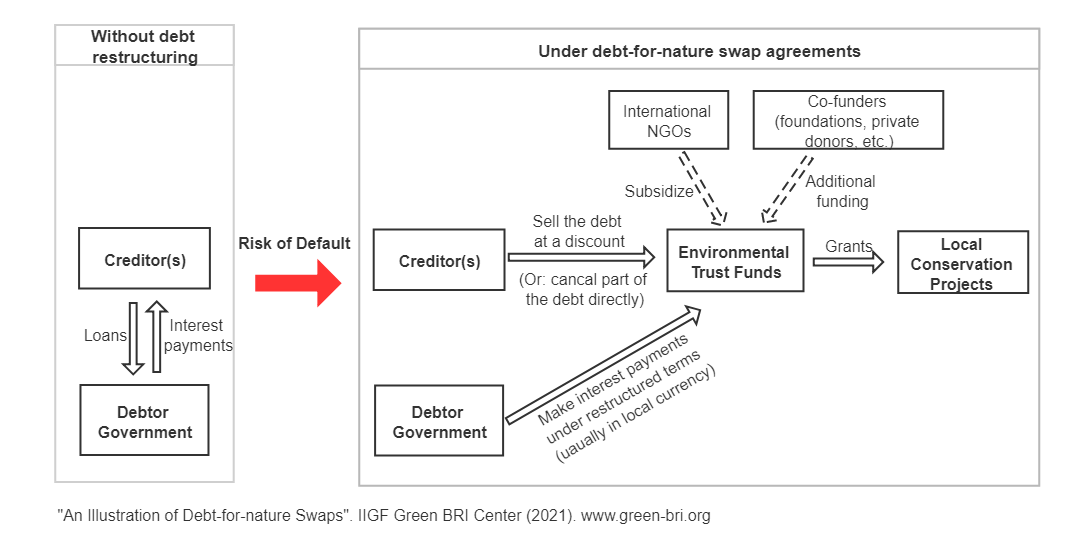
A debt-for-nature swap typically involves three parties: the debtor country, the creditor (usually a government, bank, or commercial lender), and often an international conservation organization.
[8hir8d]
[xgvr27]
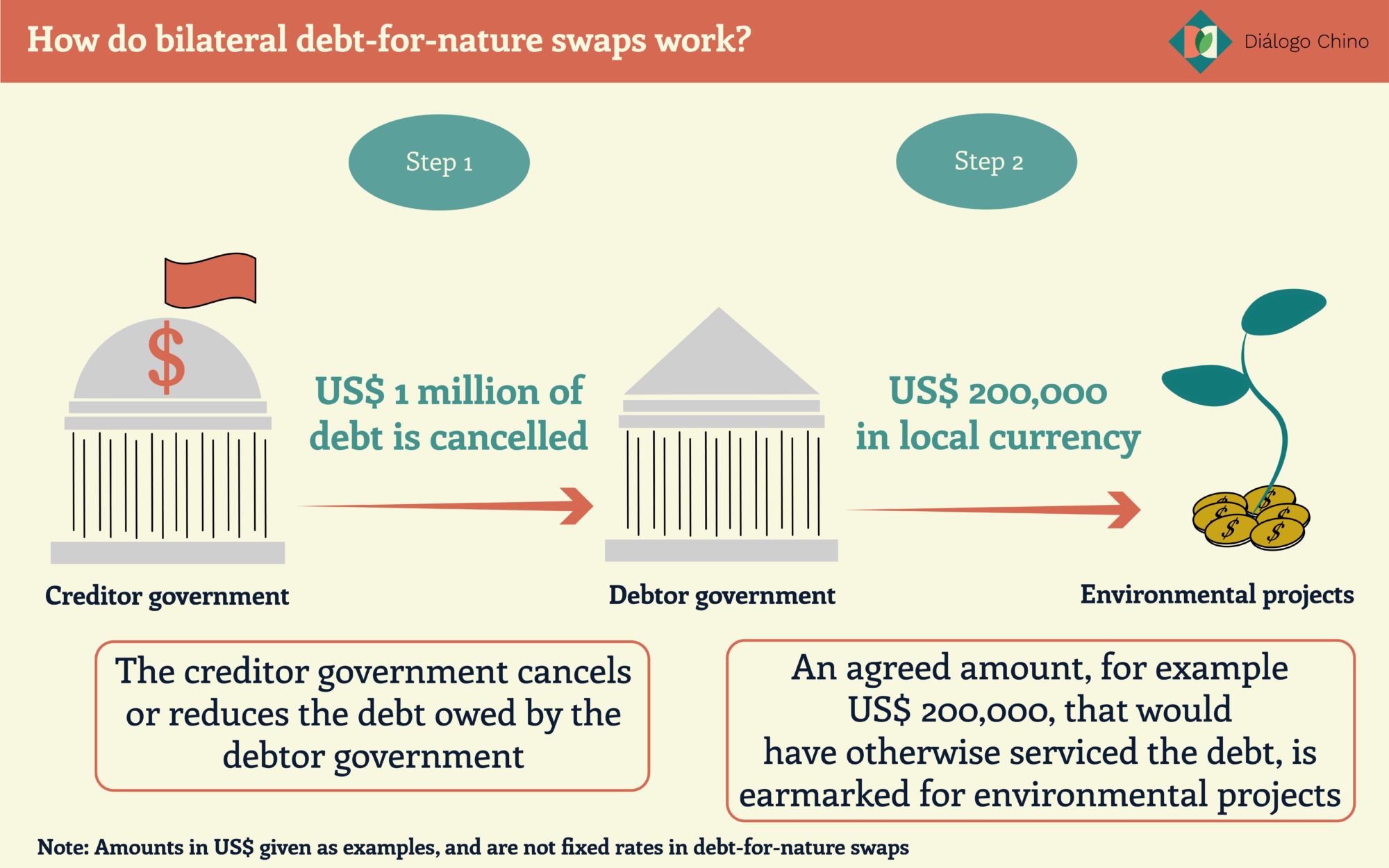
The basic mechanism works as follows: the creditor agrees to reduce or restructure the outstanding debt of the debtor country. In return, the debtor nation commits to direct local currency funds—equivalent to a portion of the canceled debt—toward projects that protect biodiversity, manage protected areas, or build climate resilience.
[pes30u]
[xgvr27]
There are two common structures for such swaps. In the first, the creditor waives part of the debt, and the debtor invests the equivalent in conservation. In the second, the creditor sells the debt—often at a discount—to a third party, such as an environmental NGO, which then uses repayments from the debtor nation to fund conservation activities.
[pes30u]
[8hir8d]
Importantly, proceeds are usually managed through dedicated trust or endowment funds to ensure transparency, accountability, and long-term impact.
[pes30u]
Practical examples highlight the impact of these arrangements. The first-ever debt-for-nature swap occurred in Bolivia in 1987, when an American NGO bought $650,000 of Bolivian debt at a steep discount and swapped it for substantial investment in local conservation efforts.
[s4ffic]
The United States notably used debt-for-nature swaps as part of its response to the Latin American debt crisis, leading to about 140 such transactions globally by 2022.
[wy0xl3]
In another case, Seychelles restructured over $21 million in debt to fund marine conservation and the creation of marine protected areas.
[pes30u]
[8hir8d]
The benefits of debt-for-nature swaps include unlocking new financing streams for conservation, alleviating fiscal pressure on debtor countries, strengthening international cooperation, and providing practical support for meeting global biodiversity and climate targets.
[pes30u]
[8hir8d]
[s4ffic]
These swaps can catalyze long-term investments in ecosystem preservation, local community development, and climate adaptation.
However, there are challenges. Critics point out that transaction complexities, the need for robust monitoring, and limited scale—relative to total debt levels—can blunt the impact of these instruments.
[8hir8d]
Some swaps may inadvertently reinforce social or economic inequalities, especially if local stakeholders are insufficiently involved in project planning or benefit sharing.
[8hir8d]
[s4ffic]
Ensuring that funds are genuinely additive and not simply replacing previous government conservation spending is also crucial for their credibility and effectiveness.
Current State and Trends
Debt-for-nature swaps experienced early momentum in the 1990s, largely driven by the United States and international organizations, but slowed in subsequent decades.
[wy0xl3]
Recently, they have regained attention as countries face mounting debt and a growing need for climate and biodiversity finance. Approximately 140 transactions had occurred by 2022, with a cumulative value exceeding several billion dollars.
[wy0xl3]
Key players in the market now include bilateral donors (such as the US and France), multilateral organizations (e.g., the World Bank), commercial banks, and a range of NGOs specializing in conservation finance.
[pes30u]
[8hir8d]
Technological tools, including remote monitoring and transparent environmental trust funds, are being adopted to improve oversight, efficacy, and measurement of conservation impacts.
[pes30u]
A current trend is the use of debt-for-climate resilience swaps, which broaden the arrangement to support climate adaptation projects as well as direct biodiversity protection.
[pes30u]
The Seychelles debt swap, with its focus on marine conservation and climate resilience, exemplifies this innovative approach.
Future Outlook
Looking ahead, debt-for-nature swaps are expected to play a larger role in the global strategy to finance conservation and climate adaptation, especially in vulnerable, debt-burdened countries. Expanded partnerships between creditors, conservation NGOs, and the private sector, coupled with advances in transparency and impact assessment, may allow these instruments to scale and drive meaningful, long-lasting environmental protection.
[pes30u]
[8hir8d]
[wy0xl3]
Conclusion
Debt-for-nature swaps uniquely link financial relief with environmental action, incentivizing countries to invest in the planet while easing fiscal constraints. As economic and ecological pressures intensify, these innovative solutions could become central to global efforts to safeguard biodiversity and develop sustainable economies.